Choosing the Right Tile Grout for the Job
10 August 2026 · All4Building.ie team
Grout is not one product
Most call-backs on a tiling job are not the tiles or the adhesive, they are the grout. Cracked joints along a bath edge, grout that has gone black in a shower, or a floor joint that has popped loose over underfloor heating - these usually come down to using one all-purpose grout for every joint on the job, rather than matching the product to what that particular joint has to deal with. Grout, movement joints and brick pointing are three different jobs, even though they can look similar once finished.
Standard tile joints vs joints that move
A normal wall or floor tile joint, away from any edge or junction, just needs a grout that fills the gap and resists moisture. Where you have movement, underfloor heating, a wet room, or a joint next to a bath or shower tray, you need a flexible grout that can cope with the tile and substrate expanding and contracting without hairline cracking.
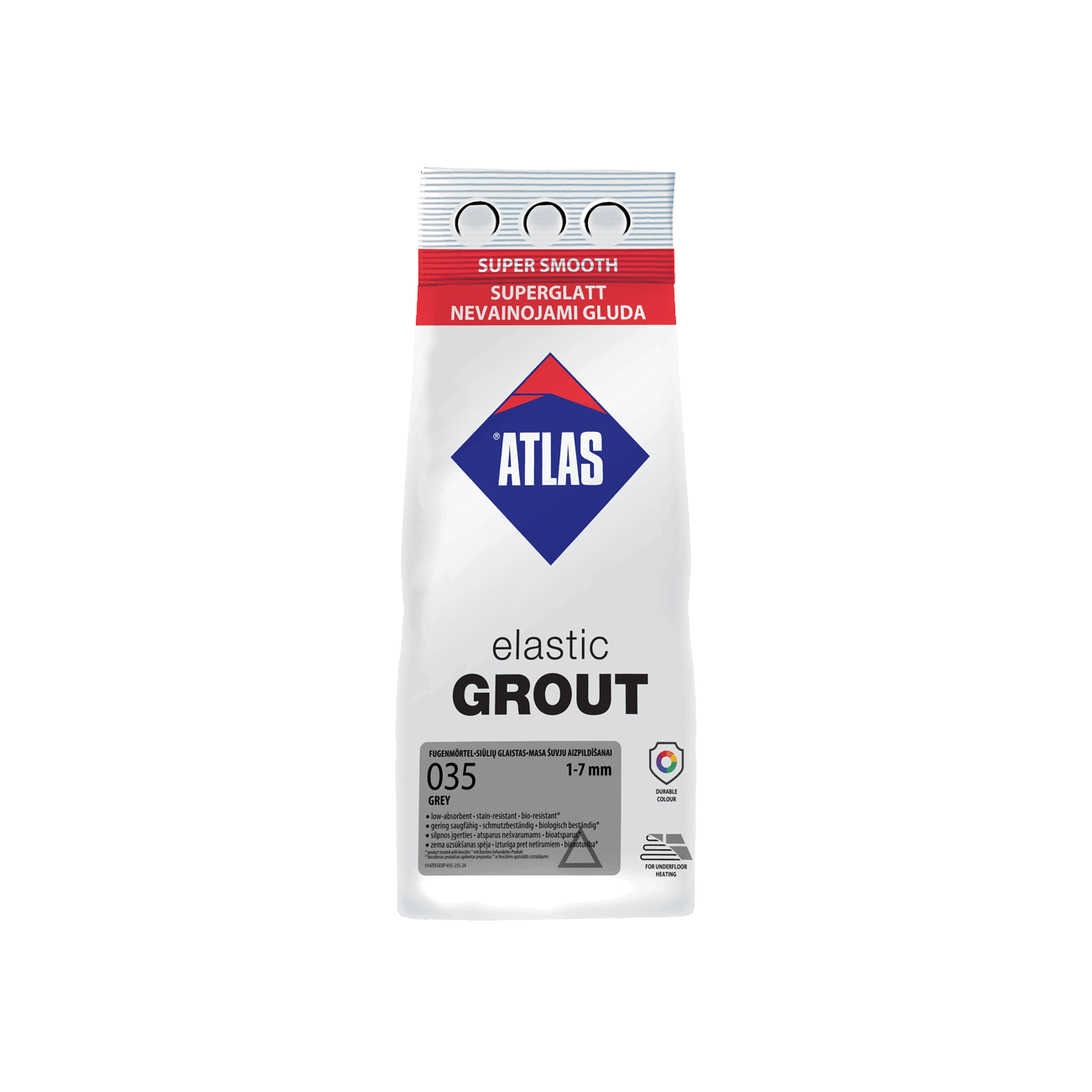
ATLAS Elastic Grout 5kg is built for exactly this: a flexible tile joint grout suited to floors with underfloor heating, wet rooms, and anywhere the joint needs to move slightly rather than crack.
| Situation | What to use | Why |
|---|---|---|
| Standard wall tiling, dry area | Flexible grout still recommended | Cheap insurance against future cracking |
| Floor tiles over underfloor heating | ATLAS Elastic Grout | Copes with thermal movement in the joint |
| Shower or wet room tiling | ATLAS Elastic Grout | Resists moisture ingress better than a rigid grout |
| Joint where tile meets bath, shower tray or another surface | Sanitary silicone, not grout | These are movement joints, not grout joints |
| Pointing brick or stone facing | Grouting mortar for brick/stone | Different product, different finish, more body |
Where grout should not go at all
Any joint where tile meets a different material or fixture - the edge of a bath, a shower tray, an external corner, or where a wall tile meets a floor tile - is a movement joint, not a grout joint. Grout is rigid once cured and will crack along these lines even if you used a flexible product, because the two surfaces either side of the joint move independently.
Atlas Elastic Sanitary Silicone Sealant is the right product for these joints. It stays flexible permanently, so it takes up the movement instead of cracking. Run a bead along the bath or tray edge, in internal corners, and anywhere tile meets a different surface, and leave the grout for the flat runs of tile only.
Grouting or pointing brick and stone
If you are working on exposed brickwork or a stone-faced wall rather than tiles, the products are different again. Atlas Grouting Mortar for Stone & Brick Grey 25kg is a heavier-bodied mortar for pointing brick and stone joints, and K Dash Grouting Mortar for Bricks White 25kg gives a lighter, white pointing finish where that suits the brick. Neither of these is a substitute for tile grout, and tile grout should not be used to point brickwork - the joint widths and the finish it needs to hold up to outdoors are different.
If the substrate is uneven before you start
None of this matters if the tiling surface itself is not level. If you are tiling onto an uneven wall or floor, Cekol ZW-04 Levelling Mortar 3-50mm is used to even the substrate out before adhesive and tile go on, rather than trying to take up the unevenness in the adhesive bed. Skipping this step is a common reason tilers end up fighting lippage across a floor.
Check the datasheet for exact mixing ratios, coverage and cure times before you start - these vary by product and by how thick a bed you are applying, so we would rather point you to the datasheet than guess a figure here.
A common mistake worth avoiding
Grouting a bath edge or a wet room corner with the same grout used on the flat tile runs, instead of switching to sanitary silicone at the junction. It looks fine on the day. Within a few months the rigid grout at the movement joint has hairline-cracked, and water gets behind the tile at exactly the point you most needed it kept out. Grout the field, silicone the movement joints, every time.
For the wider range, see Tile Adhesives & Mortars for adhesives and levelling products alongside the grouts above.
Get your materials list sorted before you start
Send us the room dimensions, or the square metreage of tiling and the length of bath and corner joints, and we will put together a materials list so you have the right grout, silicone and mortar on site from day one rather than a mid-job trip for the wrong tube. In-stock orders go out within 7 working days, and delivery is free in Ballincollig and Cork City. Collection is by appointment only, so give us a shout first.
Call 085 868 8459 or email sales@all4building.ie and we will sort the list out with you.
Need materials for this job?
We deliver trade-quality building materials across Ireland. Call 021 487 6963 or message us on WhatsApp for a quote.
Shop now