Choosing EPS board thickness for external wall insulation
28 September 2026 · All4Building.ie team
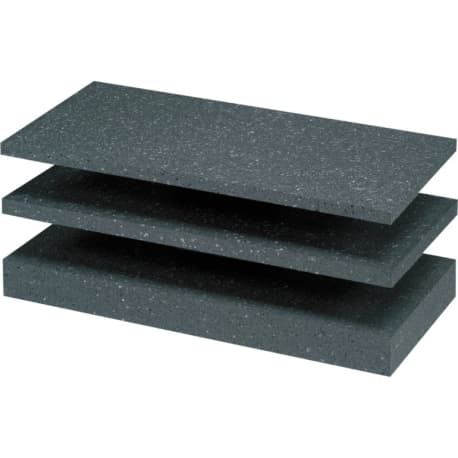
The thickness question comes before the render colour
When someone rings us about external wall insulation, thickness is usually the first thing we talk about, well before render colour or delivery dates. It is the one decision that shapes everything else on the job: how far the wall builds out from its current line, how much extra depth has to be dressed at window reveals and sills, how the roof verge and any existing cills need to be extended, and ultimately how much of a jump in performance the wall actually gets.
There is no single right answer. A thin board suits a small upgrade or a tight detail where you cannot afford to lose much depth. A thick board suits a wall starting from very little insulation, or a build aiming for the biggest improvement it can get. Between those two ends, the right choice comes down to the current state of the wall, what the job is trying to achieve, and how much the reveals, sills and window returns can absorb before the detailing gets awkward.
What the five thicknesses are actually used for
We stock graphite EPS in five thicknesses, and each one tends to get used for a different part of the job rather than one size fitting every wall.
| Thickness | Where it typically goes |
|---|---|
| 20mm | Reveals, sills and returns, dressing back to match a thicker board used on the main wall |
| 50mm | A lighter upgrade over sound existing render, or smaller areas like dormers and gables |
| 80mm | A common middle-ground choice on older solid-wall retrofits |
| 100mm | The board most jobs settle on for a full wrap of an existing house |
| 150mm | New build work or a retrofit targeting the biggest possible jump in performance |
That table is a starting point, not a rulebook. If you are working towards a specific performance target for a grant or a certifier, get the U-value calculation done properly rather than picking a thickness off a table like this one. If the aim is simply a solid, worthwhile upgrade to an older wall, the 80mm to 100mm range is where most straightforward retrofits land in practice.
Do not forget the starting track
Whatever thickness you land on, the EPS Starter Track is what sets the job up properly at the base of the wall. It gives you a level line to build the first course of boards off, so the whole run above it stays true rather than drifting out of level board by board, and it protects and finishes the bottom edge of the insulation where it meets the ground or a cill. Skipping it and trying to set the first course out by eye is where a lot of EWI jobs start going wrong.
Fixing the boards once thickness is decided
Thickness affects the fixing plan too. The adhesive or basecoat carries most of the board's weight on a sound, sucked-up wall, but Polystyrene Insulation Fixings back that up mechanically, particularly on taller elevations, more exposed sites, or where you are not fully confident in what the existing substrate is doing underneath. The fixings we stock cover a length range wide enough to suit boards from 20mm right up to 150mm, so you are not sourcing a separate fixing for every thickness on the job. Check the datasheet for the exact embedment depth needed into your particular substrate before ordering, since that depends on the wall behind the board as much as the board itself. The full basecoat, adhesive and mesh range for finishing off whichever thickness you choose is in EPS Insulation System.
Mixing thicknesses on the one job
It is normal, not a compromise, to run more than one thickness on a single house. A typical approach is one main thickness across the field of the wall, with 20mm used to dress back reveals, sills and window returns so the finished depth around openings does not create an awkward shadow gap or leave the window sitting too far back in its hole. On a wall that is slightly out of plumb, some installers will also switch between two adjacent thicknesses bay by bay to true up the overall line, rather than trying to pack out an uneven wall with extra adhesive alone. If you are planning a job like this, it is worth working out the split between thicknesses before you order rather than after the main boards are already on site.
Send us your wall dimensions and we will work out the boards
Send over the wall measurements, the current wall buildup if you know it, and roughly what you are trying to achieve, and we will put together a materials list with the right mix of thicknesses, starter track, fixings and adhesive for the job. Insulation boards are quoted individually rather than off a standard price list, since the quantity and thickness mix varies so much job to job. In-stock items go out within 7 working days, delivery is free in Ballincollig and Cork City, and collection is by appointment only.
Call 085 868 8459 or email sales@all4building.ie and we will get the numbers sorted.
Need materials for this job?
We deliver trade-quality building materials across Ireland. Call 021 487 6963 or message us on WhatsApp for a quote.
Shop now