Getting external wall insulation done before winter
5 October 2026 · All4Building.ie team
The question we get every October
Once the clocks are close to going back, we get the same call every year: is it too late to start external wall insulation. Most of the job is not weather-sensitive, and the part that is can be held back and finished later without wasting anything already done. The trick is sequencing the job so a change in forecast does not leave a wall half finished.
What can go ahead whatever the weather is doing
Fixing the boards themselves is mostly about a sound, dry substrate on the day, not the season. A wall that has been rained on the night before needs time to surface-dry before boards go on, but once that is sorted, boarding can carry on through a normal Irish autumn.
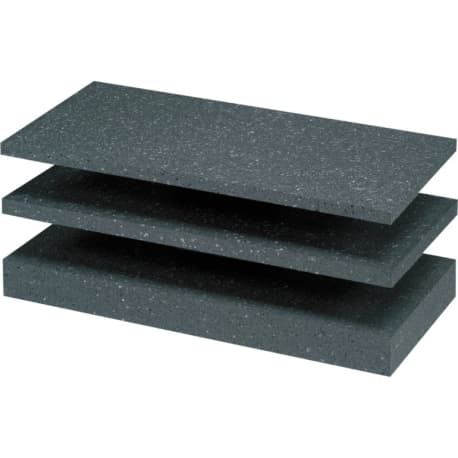
- Graphite EPS insulation boards in any thickness go up the same way in October as they do in June, provided the wall behind them is sound and dry on the day.
- The EPS Starter Track sets the first course out level and protects the bottom edge of the boards, and fitting it is not weather-dependent.
- Polystyrene Insulation Fixings are a mechanical fix, so they do their job regardless of temperature, which is exactly why we recommend backing up the adhesive with fixings on an autumn or winter job rather than relying on adhesive alone.
- Ceresit CT84 Express Foam Adhesive is worth keeping on the van through the colder months. It is a foam-in-a-can product rather than a wet, cement-based mix, so it is less at the mercy of the substrate drying out slowly in damp, low-light conditions. Check the datasheet for its minimum application temperature before you rely on it on a genuinely cold day.
What needs a settled, dry spell
Two stages in the system are properly weather-dependent, and rushing either of them in marginal conditions is how jobs come back to us the following spring with cracking or staining.
- Basecoat and mesh. Ceresit ZU 2-in-1 EPS Adhesive & Basecoat, used to embed the Fibreglass Reinforcing Render Mesh, is a cement-based wet trade. It needs to cure through its full depth, not just skin over, before anything else goes over it, and cold, damp or shaded elevations take noticeably longer than a wall in full sun. Check the datasheet for the working temperature range rather than guessing from how the weather feels on the day.
- The render finish coat. This is the stage most worth being patient about. Applying Ceresit CT74 Silicone Render or Ceresit CT76 Silicone Render in a cold snap, or just ahead of overnight rain, is how you end up with a patchy, streaked finish that cannot be fixed without taking a coat back off. If the forecast will not give you a settled window, it is better to leave the wall primed and protected and come back to the render in spring.
| Stage | Weather-sensitive? | Product |
|---|---|---|
| Fixing boards | Mostly no, needs a dry substrate on the day | EPS boards, starter track |
| Mechanical fixings | No | Polystyrene fixings |
| Foam adhesive | Less sensitive than wet adhesive | Ceresit CT84 Express Foam Adhesive |
| Basecoat and mesh | Yes, needs full-depth cure | Ceresit ZU 2-in-1 Basecoat, fibreglass mesh |
| Priming before render | Yes | Ceresit CT16 Render Primer |
| Silicone render finish | Yes, the most weather-sensitive stage | Ceresit CT74 or CT76 Silicone Render |
A sequence that survives a change in the weather
If you are starting a job now and are not confident the weather will hold until it is finished, get the boards fixed, mesh embedded and basecoat cured while you still have reasonable working days. Ceresit CT16 Render Primer can go on once the basecoat has properly cured, which protects the wall and keeps it ready to render as soon as a dry spell turns up, even if that is not until spring. A primed, basecoated wall sitting through winter is not a problem. A render coat applied in the wrong conditions is.
A common mistake worth avoiding
Pushing ahead with the render finish coat because the scaffold is up and the crew is on site, rather than because the weather is actually right for it. A silicone render applied too cold or too close to rain rarely fails outright, but it often finishes patchy or uneven in a way that is obvious from the road, and the only real fix is going back over it once conditions improve. It is cheaper to wait a few weeks than to redo a finish coat.
Send us the job and we will help you plan it
Send over the wall dimensions, the current wall buildup if you know it, and roughly when you are hoping to get started, and we will put together a materials list and talk through what can be done now against what is worth holding back for better weather. In-stock orders go out within 7 working days, and delivery is free in Ballincollig and Cork City. Insulation boards are quoted individually, and collection from us is by appointment only.
Call 085 868 8459 or email sales@all4building.ie and we will help you plan the job around the weather, not against it.
Need materials for this job?
We deliver trade-quality building materials across Ireland. Call 021 487 6963 or message us on WhatsApp for a quote.
Shop now